Description
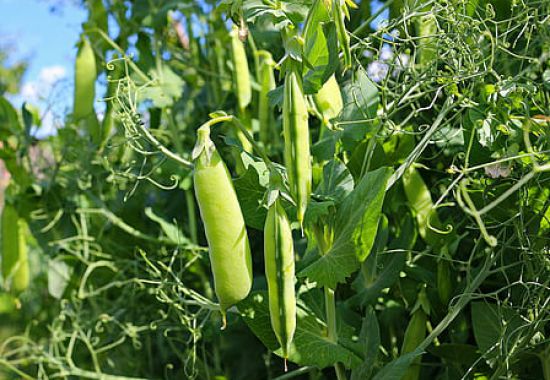
The pea is an annual climbing plant with paripinnate leaves with tendrils and serrated edges. Its root system is underdeveloped, although its main taproot can be quite deep. Its large white or purple flowers generate pods of variable shape and size depending on the cultivar. Those pods can have 3 to 10 kernels inside.
In Spain, there are approximately 150,000 hectares of peas, although the vast majority are dedicated to animal consumption. The approximate production is 220,000 tons per year, with the provinces with the highest production being Huesca, Zaragoza, Albacete and Valladolid.
Soil
Peas prefer well-drained soils with plenty of limestone (but not too much). They do poorly in soils that are too clayey and with high humidity, since the seed is prone to rot in conditions of high humidity. The optimum pH of the soil is slightly acidic, from 6 to 6.5. It is moderately resistant to salinity.
PH
Salinity
Quality
Temperature
Although its optimum growth temperature is 16-20ºC, pea is a plant that adapts to low temperatures. The plant freezes at temperatures of -3 and -4ºC. In the case of weak frosts the crop manages to recover and keep its growth. From 35ºC the plant begins to see its growth limited, being harmful if these high temperatures are maintained for a long time.
Irrigation
The pea is not a water-demanding plant if the humidity conditions are not unfavorable. The waterings must be moderate trying not to flood the crop too much. In the case of sowing in autumn, it is not necessary to water the crop until the beginning of spring. The maximum number of irrigations does not usually exceed 6 per crop cycle.
Irrigation properties
Varieties