Description
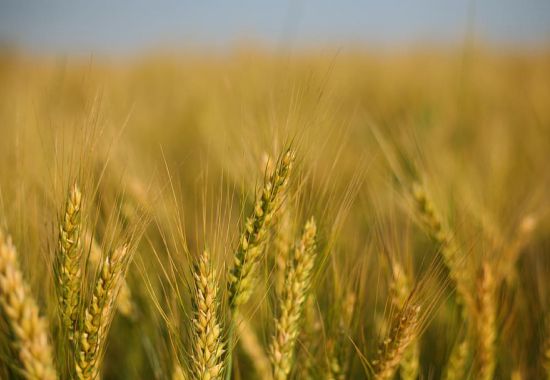
Barley is the fourth most important cereal worldwide, after wheat, corn and rice. It is a cereal whose inflorescence is mainly used to classify it, there being mainly 2-row barley and 6-row barley. It is a herbaceous plant with a fasciculate root system and a very flexible stem. Its grain grows inserted in the sheaths of its flowers, which are self-fertile.
In Spain, approximately 2.6 million hectares of barley are cultivated, with only 13% of this area used for 6-row barley and the rest for 2-row barley. In tons, the total production is 9.1 million tons altogether.
Soil
They prefer well-drained soils (although not totally sandy) and not too clayey. He especially prefers medium-textured ones such as loam soils. It grows relatively well in soils with a pH of 6 to 8.5. It is tolerant to excess calcium in the soil and resistant to salinity.
PH
Salinity
Quality
Temperature
Barley needs a minimum of 6ºC to grow, although its growth stops at 0ºC. It is resistant to cold and the winter varieties can withstand temperatures down to -10ºC. Depending on the climate of the area, if the winter is too cold, it will be recommended to grow spring varieties. Its optimum growth temperature is about 15ºC, being the optimum during heading slightly higher (17ºC).
Irrigation
Irrigation properties
Varieties
The 2-row barley varieties grown In Spain are Beka, Alpha, Berangene, Blance, Clarine, Eva and Germania among others. Of the 6-row barley varieties, the most common are Albacete, Barbarrosa, Dobla, Málaga and Monlon among others.